
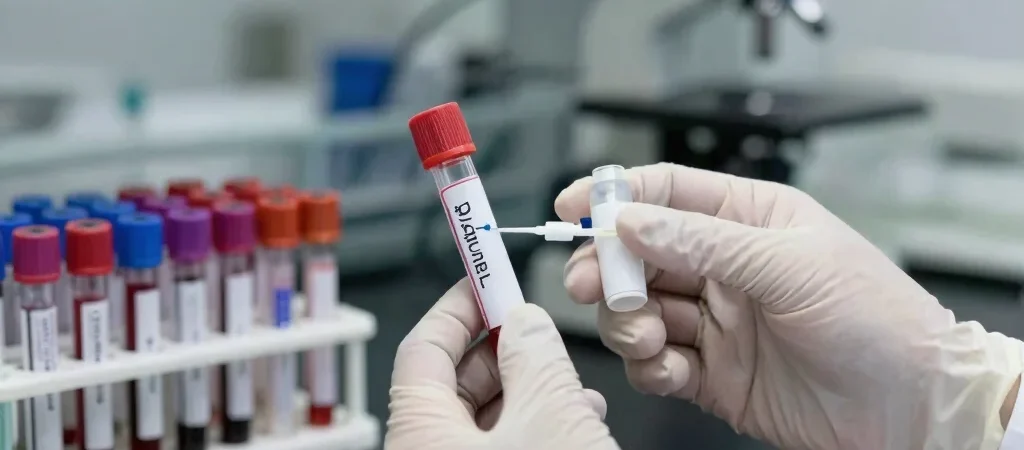
A CRISPR treatment for sickle cell disease does not rewrite every cell in a person’s body. Instead, it edits blood-forming stem cells outside the body, then returns them after intensive preparation. That distinction helps explain both the promise and the scale of the treatment.
What the edit is designed to do
The treatment, called exagamglogene autotemcel, was approved in the United States in 2023 for certain patients with sickle cell disease. It changes a control region involved in the gene BCL11A, aiming to increase fetal hemoglobin, a form of hemoglobin that can reduce sickling of red blood cells. The approach does not directly repair the inherited mutation that causes the disease.
The treatment is a process
A patient’s own stem cells are collected and edited in a laboratory. Before those cells are returned, the patient receives high-dose chemotherapy to make room in the bone marrow, followed by a hospital stay and a period of recovery. That conditioning step brings significant risks, including effects on fertility, and makes this far more involved than a one-time injection.
What the evidence can tell us
Clinical studies found that many treated participants went for extended periods without severe vaso-occlusive crises, the painful episodes that can require urgent care. That is a meaningful outcome, but it is not the same as proving that every patient will respond or that the benefits will last for a lifetime. Long-term follow-up matters because the edited cells are intended to remain in the body for years.
Promise and practical limits
For eligible people with severe disease, the treatment represents a major change in what medicine can attempt. Access is still shaped by specialist care, complex logistics, and the risks of chemotherapy, not just by the gene-editing technology itself. The useful takeaway: the edit is a striking advance, but the whole treatment pathway—not the word CRISPR—is what patients and clinicians have to weigh.